The Founder Paradox: Why the Stronger You Are, the Weaker Your Company Becomes
Updated: Mar 30

Every founder eventually discovers the same uncomfortable truth. The business is growing. The team is larger than it has ever been. And yet every decision of consequence still finds its way back to one person.
You.
This is not a leadership failure. It is not a team problem. It is a structural one. And it has a name.
This is not a leadership failure. It is a structural one. And it has a name: the governance gap.
This is where The Founders Paradox becomes visible. The governance gap is the distance between how decisions should move through a growing organization and how they actually move. In most founder-led companies, that gap is far wider than anyone inside the business realizes. The cost is easy to miss. It appears as delays, second-guessing, and quiet resistance around every meaningful move you try to make. Left unaddressed, it becomes a ceiling.

WHEN GROWTH OUTPACES STRUCTURE
In the early days, centralizing decisions in the founder is not a flaw. It is a feature. You knew the vision, the client, and the market better than anyone else in the room. The company needed your instincts. It needed your speed. It needed your ability to pivot midweek and close by Friday.
Then the organization grew. The same habits that once created momentum begin to create friction. Team members pause and wait for confirmation instead of taking initiative. Directors hesitate to resolve conflicts they are perfectly capable of handling. Issues that should be addressed laterally keep traveling vertically. Somewhere along the way, the organization learned that real decisions only count when they come from you.
What worked beautifully at 10 people does not translate cleanly at 50.
Consider a mid-sized professional services firm led by a founder with a 15 year reputation for clear, instinct-driven leadership. When the firm reached 40 employees, her calendar had quietly become a holding pen for decisions. Directors flagged vendor problems but refused to move without her sign-off. Managers hesitated on approving initiatives they had already scoped and funded. Tension between departments lingered for weeks. It wasn't because no one saw it. It was because everyone was waiting for her to settle it.
The firm was profitable. Clients were satisfied. From the outside, nothing looked broken. On the inside, the company had organized itself around a single point of failure.
That is the governance gap in practice. Not visible chaos. Just daily friction that compounds until it becomes a ceiling.
WHY FOUNDERS KEEP GOVERNANCE INFORMAL
Most founders are not skipping governance because they lack sophistication. They resist it because formalizing authority can feel, in the early stages, like a direct threat to the very engine that built the company. Speed. Conviction. The ability to act on instinct without committee approval.
There is another layer that is harder to name. In many founder-led organizations, decision authority is fused with identity. Who calls the shots is not a technical question. It is wrapped up in who took the first risk, who carries the name on the door, who bet their reputation and their savings on an idea most people could not see.
Distributing that authority does not land as smart organizational design.
It can land as personal erasure.
That fear is exactly what keeps brilliant founders trapped inside companies that cannot grow past them.
The founders who navigate this transition well accept a different frame entirely. They stop seeing governance as a constraint around their power and start treating it as infrastructure for their judgment. The structure does not replace their wisdom. It carries it farther than any one person's stamina or calendar ever could.
THE COMPOUNDED STAKES OF FAMILY ENTERPRISE
The stakes change once you move from founder-led to family-owned.
In a family enterprise, ownership, bloodline, and management overlap. Business decisions no longer sit in a clean container. Strategic disagreements carry the weight of long memory. A conversation about performance can reopen old questions about favoritism, sacrifice, and who really earned their seat at the table.
In that environment, the governance gap is more than an organizational issue. It is relational. When no structure exists to separate the founder's role as parent from their role as CEO, every business conversation arrives pre-loaded with history. When the next-generation leader is simultaneously child and successor, every decision about authority becomes a referendum on love, respect, and legacy.
Family businesses that operate without clear governance structures do not drift toward clarity on their own. They accumulate unspoken rules and undocumented expectations. Assumptions about succession harden into perceived promises that were never actually made. Informal habits in the first generation become unwritten law in the second. No one remembers choosing them. Everyone inherits them.
The most enduring family enterprises treat governance as architecture for the family's values, not just the founder's preferences. That distinction is everything.
Governance in a family business is not about clipping any one person's wings. It is about building a decision system that reflects what the family says it stands for. Not defaulting to whoever commands the most authority in the room at any given moment.
THE HIDDEN COST NO ONE IS MEASURING

When decision authority stays concentrated in one person, the organization pays a price that never appears on a financial statement.
Leadership teams never develop real confidence because they are rarely permitted to exercise real authority. High-potential people who are hungry for ownership adjust at first. They wait. They escalate. They explain. Eventually, the best of them leave for environments that trust them enough to let them lead.
Internal conflicts do not get resolved at the level where they originate. They sit, accumulating charge, until they become the founder's problem. Strategic fractures compound beneath what looks, from the outside, like stable operations.
Meanwhile, the founder's own capacity begins to thin. Time that should be reserved for the next chapter gets consumed by decisions that belong three levels down. The business may still be performing. But leadership begins to feel unsustainable.
Because it is.
That weight is a signal. Not that you are failing, but that your structure is.
BUILDING SOMETHING THAT OUTLASTS YOU
The companies that scale cleanly into their next era are not always the ones with the most brilliant founders. They are the ones led by founders who made a conscious decision: this organization must be able to make sound decisions without me in the room.
They do not step back in the caricatured sense. They step up into a different definition of leadership. Their work becomes building the frameworks, expectations, and decision rights that allow their judgment to echo through the organization. Even when they are focused somewhere else entirely.
The governance gap does not shrink over time. It widens, quietly, until one hard moment forces a reckoning that could have been chosen years earlier.
You can choose differently. It begins with one question, asked with ruthless honesty: where does authority actually live in my organization today? Not where the org chart says it lives. Not where you intend it to live. Where it truly sits when things are urgent, messy, and unclear.
That is the moment the mindset begins to shift. Power stops being something you protect and starts being something you design.
To see if The Founder Paradox is present in your business, take the Leadership Decision Flow Diagnostic.
In less than two minutes, you will see with uncomfortable clarity, where authority lives right now and what structural shifts are needed if you want your organization to grow beyond your capacity to carry it alone.
The question is not whether your team is capable. The question is whether you are willing to build the structure that proves it.
About the Author:

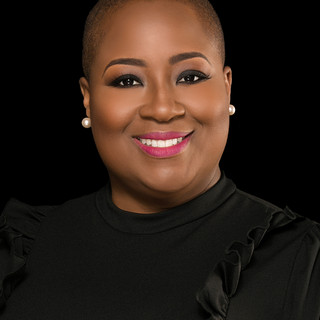
Arnettia S. Wyre, Esq.
Owner & Lawyer
With over $7.2 million in structured client agreements and 20+ years as an attorney, Arnettia has developed the company’s signature approach that integrates legal protection, conflict resolution, and strategic advisory services. She transforms leadership challenges into sustainable business solutions.
Comments