The Hidden Cost of Being the Chief Everything Officer
Updated: Feb 4

There is a role many women CEOs assume long before they ever name it. It does not appear in job descriptions or organizational charts, yet it quietly governs how decisions are made, how risk is managed, and how responsibility is carried. Over time, it becomes so familiar that it feels normal.
You become the Chief Everything Officer.
You are not only leading the business. You are holding the consequences of every major decision. You are anticipating problems before they surface, managing tensions before they escalate, and absorbing risk that no one else is positioned or prepared to carry. From the outside, this looks like competence. From the inside, it feels like constant vigilance.
This is where silent strain begins.
Most women CEOs do not arrive here intentionally. You may be leading a multimillion-dollar budget, a lean but mighty team, or a legacy organization that looks stable on paper but runs on your personal vigilance. You arrive here because you are capable, trusted, and repeatedly proven under pressure. Gradually, sensitive matters, financial decisions, legal considerations, and unresolved conflicts all begin to route through one person. Not because control is demanded, but because safety is assumed.
The organization learns, often unconsciously, that clarity lives with you. Board members, senior staff, even outside counsel begin to treat you as the final filter. Not just for what is legal or possible, but for what feels safe.
When Competence Becomes a Catch-All
Over time, this overextension begins to shape financial outcomes in ways that are rarely discussed. Financial wellness is often framed around revenue, profit margins, or fiscal discipline. But for many women CEOs, the more consequential issue is decision congestion.
When too many decisions live in one place, opportunities are delayed not for lack of insight, but for lack of capacity. Delegation begins to feel risky because the consequences still land with you. Financial choices become reactive rather than strategic. Growth is capped by the availability of one person.
The business may remain profitable. The numbers may still look strong. And yet, clarity erodes.
That erosion has a cost. Not because revenue disappears overnight, but because clarity does, and clarity is what protects profitability. Deals move slower than they should, not because the market is soft, but because every path must pass through you. Hidden delays show up as missed renewals, stalled hires, and projects that never quite make it off the whiteboard.
There is also a psychological tax that does not show up on any financial statement. It comes from being the person who always knows. Not just what is happening, but what could happen next. Not just which decisions need to be made, but how those decisions will ripple through people, reputations, and long-term outcomes.
This tax often shows up as:
Constant vigilance and mental scanning
Holding emotional stability for others while suppressing your own uncertainty
Anticipating conflict and quietly mitigating it before it escalates
Carrying consequences others do not fully see or share
This is invisible labor. It rarely appears in performance metrics, and it is seldom acknowledged out loud. Not because it is insignificant, but because strength has become the expectation.
Many high-performing women normalize this strain because it has been reinforced over time. Competence becomes the baseline. Privacy replaces partnership. Strength discourages intervention. Somewhere along the way, you learned that asking for support could be misread as incompetence, ingratitude, or weakness. So you carry more and explain less. You tell yourself it is easier to handle it alone, faster to decide on your own, safer not to burden others. These patterns are not failures of discipline or resilience. They are structural dynamics that go unnamed for far too long.
True financial wellness does not begin with working harder or earning more. It begins with clarity. Clarity about which decisions truly require your authority. Clarity about where risk should reside. Clarity about what you are carrying out of habit rather than necessity.
When everything flows through one person, even the most capable leader becomes a bottleneck. The cost of that bottleneck is both financial and personal.
Relief comes not from doing more, but from placing responsibility where it belongs.
This is the shift from Chief Everything Officer to strategic leader. Strategic clarity is not about speed. It is about accuracy. It requires space to think without performance, pressure, or interruption. It requires confidential reflection and honest assessment. It requires naming the weight you have been carrying so that it can be redistributed with intention.
The most financially well leaders are not the ones who carry the most. They are the ones who have decided to stop carrying what was never meant to be theirs alone.
A Quiet Diagnostic Reflection

Before you move on to the next meeting, the next decision, or the next fire to quietly put out, take three uninterrupted minutes.
The Chief Everything Officer Diagnostic™ was designed as a private, precision tool to help you see exactly where overload has become part of the structure.
Consider the following questions honestly, without judgment. This is not about blaming yourself for what you carry. It is about telling the truth about what it costs.
Which decisions consistently default to me, even when others are capable of carrying them?
Where am I holding financial, legal, or relational risk that has never been clearly assigned?
What decisions am I delaying not because I lack insight, but because I lack space to think?
In what ways has my competence quietly trained others to depend on my availability rather than shared responsibility?
If I were no longer the central clearinghouse for everything, what would finally have room to grow?
These questions are not meant to be answered quickly. They are meant to be sat with. If these questions land closer to home than you expected, that is your data.
Use the Diagnostic to identify where overload has become structural. Then decide, with precision, what you will no longer carry alone.
About the Author:

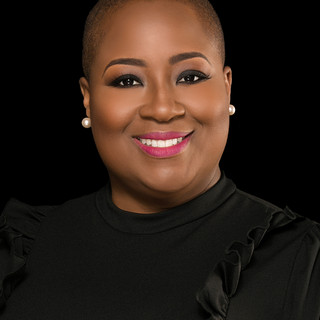
Arnettia S. Wyre, Esq.
Owner & Lawyer
With over $7.2 million in structured client agreements and 20+ years as an attorney, Arnettia has developed the company’s signature approach that integrates legal protection, conflict resolution, and strategic advisory services. She transforms leadership challenges into sustainable business solutions.


Comments