The Myth of the Self-Sufficient Leader: Why Leading Alone Is Now a Structural Risk
Updated: Feb 17

You can run a multiple six-figure company and still have no one you can tell the whole truth to.
The investors see the headline wins.
Your team sees the curated version.
Your family sees the exhaustion.
For decades, American leadership culture has rewarded a particular archetype: the self-sufficient leader. The one who carries the weight without complaint. The founder who “figures it out.” The CEO who makes hard decisions alone and keeps moving.
That archetype is not only outdated. It is increasingly destabilizing.
In today’s business environment, complexity has outpaced any single leader’s capacity to think clearly in isolation. For women founders and CEOs leading multiple six-figure and seven-figure companies, that expectation is even louder: be capable, be composed, and be alone—no matter how heavy it gets.
The cost of that expectation is mounting. It shows up in burnout, misaligned teams, avoidable conflict, and brittle organizations that appear stable until they suddenly are not. What feels like emotional isolation is often structural: decision authority concentrated in one person, escalation pathways that default upward, and governance that matures more slowly than revenue.
The Lie We Were Sold About Strength
The idea that strong leaders must be self-contained has deep roots. Historically, leadership authority was conferred on those expected to be emotionally distant, decisive, and impermeable. Support was framed as weakness. Reflection was framed as hesitation. Asking for counsel was framed as uncertainty.
For women—particularly Black women—that myth carried an added burden. Self-sufficiency was not merely aspirational; it was often a prerequisite for legitimacy. You learned early that being “low maintenance,” unflappable, and endlessly capable was the price of admission. What once functioned as a survival strategy has quietly become a liability.
Modern leadership is not about having all the answers. It is about governing complexity, which requires protected space to think, test assumptions, and interrogate risk before it metastasizes into crisis.
For women founders, that protected space is not indulgence. It is responsibility. It is choosing to relate to yourself as a leader whose clarity affects employees, clients, families, and future opportunity—not a machine whose only value is output.
Why Isolation Is Now a Leadership Risk
When leaders operate alone, three things reliably happen.
Decisions bottleneck - Everything routes back to you. Not because others lack competence, but because the system has learned that you will absorb the risk. You become the escalation point for every conflict, every exception, every “quick question,” and your calendar stops reflecting your true role.
Conflict gets delayed - Issues are managed internally rather than surfaced honestly. Tension simmers under the guise of harmony until it erupts in turnover, formal complaints, or reputational damage that could have been prevented with an earlier, braver conversation.
Judgment degrades - Not from lack of intelligence, but from cognitive overload. Constant decision-making without reflection narrows perspective. You start solving for what is immediate and visible instead of what is durable and strategic.
These are not personal failings. They are structural outcomes of unsupported leadership. Over time, those structures train you to neglect yourself, treating your needs as optional and your exhaustion as normal.
The result is enterprise risk concentrated in a single human being.

A Cultural Reckoning, Named Out Loud
This is why recent cultural conversations around rest, care, and boundaries have resonated so deeply—particularly among high-achieving women. What is often dismissed as “soft life” rhetoric is, in reality, a public rejection of an unsustainable leadership model.
During her Golden Globes acceptance speech, Teyana Taylor gave language to a tension many women leaders know intimately: the pressure to keep producing, keep performing, and keep winning—even when your spirit is asking you to pause. In choosing to honor her capacity, she modeled a different kind of strength.
She gave voice to what many high-achieving Black women have been carrying privately: our softness is not a liability, our depth is not too much, and our light does not need permission to shine. Those truths become boundary lines that keep our purpose from burning us out. For a woman running a multiple six-figure company, that isn’t theory. It is the difference between building something that can outlive you and quietly resenting the very business you fought to create.
The Leaders Who Last Don’t Lead Alone
Across sectors—from business to entertainment to public service—the most effective leaders share a common trait rarely discussed in public profiles: they do not think alone.
They cultivate protected spaces where ideas can be challenged without consequence, fears can be named without judgment, and decisions can be pressure-tested before they are executed. They are not therapy. They are not performative peer groups. They are confidential advisory relationships built for clarity and judgment.
At this level, isolation is not just emotionally costly; it is structurally expensive. When enterprise judgment remains concentrated in one person, continuity becomes fragile, succession becomes reactive, and long-term value becomes exposed. Protected advisory space is not about comfort. It is about fortification—ensuring what you built is durable under pressure and transferable over time.
In those spaces, leaders move from reaction to reflection. From over-functioning to alignment. From carrying everything to governing wisely. For a founder at an inflection point, this is often the only room where you are not “the strong one.” You are simply a leader allowed to think.
Saying yes to this kind of support is, in many ways, saying yes to enterprise responsibility. It is a quiet declaration: I will not allow what I built to depend solely on my exhaustion.
This is where strategic judgment is sharpened. Not in the noise of constant execution, but in the quiet of intentional thought.
Why This Matters Now
We are in a season where a single leadership misstep can ripple into lost key talent, stalled deals, or reputational damage that follows you into every future boardroom. We know that the higher your revenue, the faster those ripples travel. Employee trust is fragile. Public scrutiny is relentless. Legal, cultural, and reputational risks are intertwined in ways they simply were not a decade ago.
In this environment, the myth of the self-sufficient leader doesn’t just fail leaders, it fails organizations.
Strong leadership today is not defined by how much one person can carry. It is defined by how intentionally they think, how clearly they decide, and how wisely they distribute responsibility.
Clarity doesn’t just happen; it’s something you build when you have space and support to think.
And the most powerful move a leader can make is not doing more alone, but intentionally fortifying the conditions under which they lead—so what they built is resilient, protected, and capable of enduring beyond their constant presence.
If February is the month we talk about love, let it also be the month you decide that your leadership deserves protection too. Protection that shows up as wise counsel, structural clarity, and the intentional fortification of what you have built.
You are not disposable in service of your own enterprise. And leadership that costs you your wholeness is not strength. It is mismanagement.
About the Author:

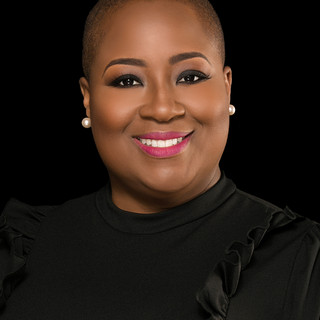
Arnettia S. Wyre, Esq.
Owner & Lawyer
With over $7.2 million in structured client agreements and 20+ years as an attorney, Arnettia has developed the company’s signature approach that integrates legal protection, conflict resolution, and strategic advisory services. She transforms leadership challenges into sustainable business solutions.

Comments